
Speak English with Loora AI
Loora AIEducation
4.92.32K Reviews
- Version
- 2.24.0
- Installs
- 10.00M
- Age Rating
- Everyone
Screenshots
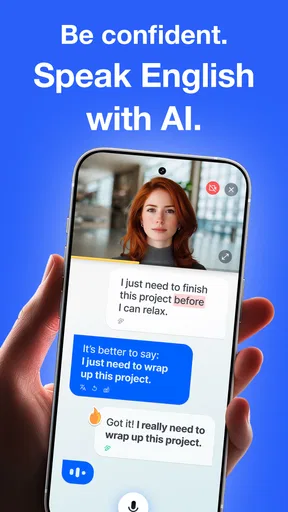
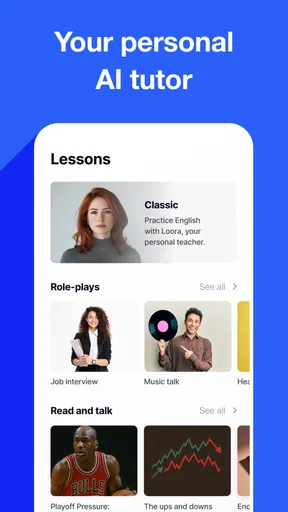
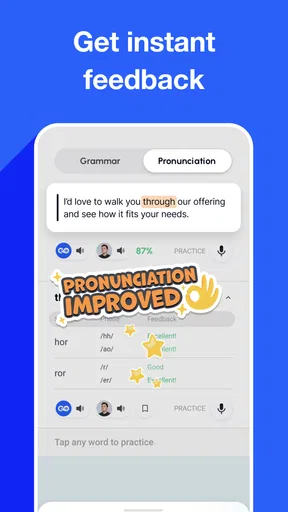
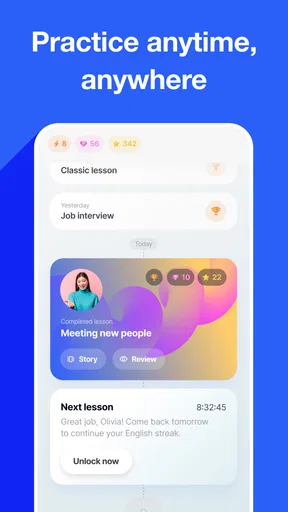
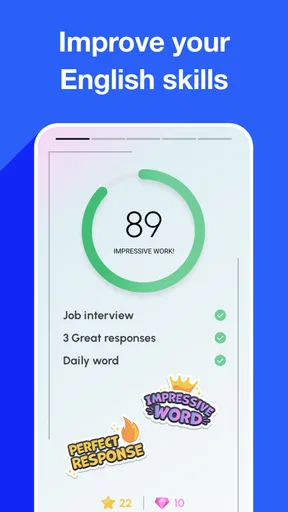
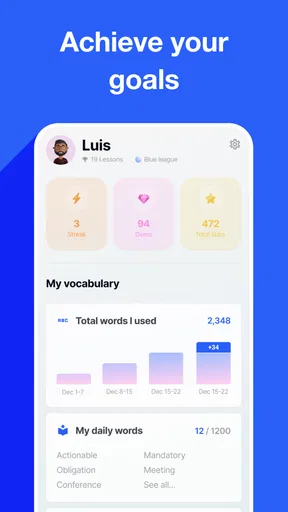
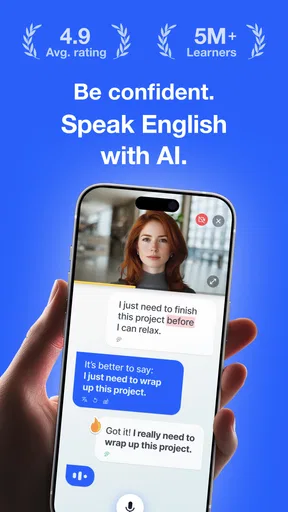
Our Review of Speak English with Loora AI
 Analysis by Appyee
If you’re weighing an English-learning app mainly by what it costs, I’d start with a simple distinction: Speak English with Loora AI is free to download, but it also offers in-app purchases priced from $14.99 to $119.99 per item. That means you can try it without paying upfront, while some options cost extra. I wouldn’t treat “free” as a promise that every part of the experience is included, and I’d check the purchase details in the app before committing.
The bigger question is whether spoken practice is the part of English you actually need. Loora is an education app from Loora AI built around speaking with an AI conversation partner. For me, that focus makes it most useful as a low-pressure place to practise forming replies aloud, rather than as a complete replacement for every part of a language course.
Where conversation practice earns its keep
Many English learners understand more than they can comfortably say. Reading and vocabulary exercises can help build knowledge, but they don’t always make it easier to answer someone in real time. A conversational session gives you a reason to retrieve words, make a sentence, and keep going when you’re unsure. That kind of rehearsal is the clearest value Loora offers.
I’d use it to practise situations that are easy to postpone in real life: explaining what I do at work, making small talk, describing a recent trip, or asking for help in a shop. The point isn’t to memorise a perfect script. It’s to get used to starting, clarifying, and recovering when the sentence you planned doesn’t come out as expected.
A practical routine, not a magic shortcut
A useful way to make the app part of a routine is to choose one conversational goal before opening it. For example, I might practise giving a short introduction, then repeat the same topic another day while trying to answer with less hesitation. Keeping the goal narrow makes feedback easier to act on than trying to fix pronunciation, grammar, vocabulary, and confidence all at once.
After a session, I’d note one phrase I struggled to produce and one sentence I managed more smoothly. That small review step turns a chat into a learning loop: practise, notice a gap, then return to it. It also helps keep expectations realistic. A comfortable exchange with an AI can build readiness, but a real conversation still brings interruptions, varied accents, and social cues that an app cannot fully reproduce.
How it compares with familiar alternatives
Compared with a textbook-style course or flashcard app, Loora puts more emphasis on speaking in the moment. Those alternatives may be a better fit if you want a clear sequence of grammar topics, structured reading practice, or deliberate vocabulary review. Loora’s appeal is different: it gives you space to try producing English without needing another person to schedule a lesson with you.
A human tutor remains the stronger option when you need detailed correction, a teacher who can explain a recurring mistake, or practice tailored to a high-stakes interview or exam. Language exchanges can provide real people and cultural context, but they depend on finding a partner and coordinating time. I see Loora as a convenient practice partner between those options, not as proof that you no longer need them.
Who is likely to benefit most
I’d recommend giving it a try if you already know some English and want more chances to speak without feeling watched or judged. It may also suit a learner who has short gaps in the day but finds it awkward to arrange a formal lesson for each one. The app is rated for Everyone, which makes its age classification broad; that does not mean every learner will find an AI conversation equally helpful, so younger users may still benefit from guidance in choosing sensible study habits.
On the other hand, I wouldn’t choose it as my only resource if I were starting from zero and needed explanations of basic grammar, or if my main goal were writing accuracy. It’s also not the best match for someone who learns better from a human teacher’s careful, personalised explanations. In those cases, a structured course, tutor, or a combination of resources would cover more ground.
What the popularity and version tell me
Loora has an average rating of 4.9 from around 238,000 ratings, with roughly 1,700 written reviews and over 5 million installs. Those figures suggest that many people have tried it and that the overall response is strong, but they don’t tell me whether its conversational approach suits a particular learner. I’d use the free access to judge that fit for myself rather than treating popularity as a guarantee.
The app was released on March 24, 2024, and its current version is 2.14.1. It supports devices running version 7.1 or later. Those details are useful when checking compatibility, but the more important test is whether you enjoy speaking to an AI often enough to make the practice habit stick.
Getting Started with Loora
First things first, setting up Speak English with Loora AI is a breeze. The app greets you with a clean interface that’s as inviting as a couch on a lazy Sunday afternoon. No overwhelming options, just simple prompts to get you started on your language journey. After a quick sign-up process, you’re ready to chat with Loora, your virtual English companion.
Personalized Learning Experience
What sets Loora apart from other language apps is its ability to tailor conversations to your level and interests. Whether you’re a total newbie or just brushing up on your skills, Loora adapts to fit your needs. The app uses AI to understand your strengths and weaknesses, providing feedback that’s actually useful. It’s like having a personal coach who knows exactly where you need a little nudge.
One of the coolest features is the ability to choose conversation topics. From travel and food to technology and current events, there’s something for everyone. It keeps the learning process fresh and exciting, which is crucial when you’re trying to stay motivated.
Interactive Conversations
Loora’s conversation style is what makes it feel less like an app and more like chatting with a friend. The AI is surprisingly adept at keeping the dialogue flowing naturally, asking questions, and even throwing in a joke or two. It’s not just about learning English; it’s about enjoying the process. Plus, the app provides instant feedback on your pronunciation and grammar, so you know exactly where you stand.
“It’s like having a chat over coffee with someone who’s always patient and never judges.”
Learning on Your Terms
We all have busy lives, and Loora gets that. The app is designed for flexibility, allowing you to squeeze in lessons whenever you have a spare moment. Even if it’s just a quick five-minute chat while waiting for your coffee, every interaction counts. The app tracks your progress over time, so you can see how far you’ve come and what areas still need work.
Loora also offers daily challenges and goals to keep you on track. It’s a great way to stay engaged and make sure you’re getting the most out of your practice sessions. Plus, who doesn’t love a little gamification to spice things up?
A Few Quirks
Like any app, Loora isn’t perfect. There were times when the AI seemed a bit robotic or didn’t quite catch the nuances of a tricky question. However, these moments were few and far between. The developers seem committed to continuous improvement, and updates are frequent, addressing any hiccups users might encounter.
Another point worth mentioning is that while the basic features are free, some premium content requires a subscription. It’s something to consider if you’re planning to dive deep into the app’s offerings, but in my view, the free content is robust enough to keep you engaged for quite a while.
Final Thoughts
All in all, Speak English with Loora AI is a solid choice for anyone looking to improve their English in a fun and engaging way. It’s versatile, user-friendly, and offers a personalized touch that many other apps lack. Whether you’re a beginner or just looking to polish up your skills, Loora offers something valuable for everyone.
If you’re curious to see how it can fit into your language learning routine, I’d say give it a whirl. It’s like having a trusty sidekick ready to help you conquer the world of English, one conversation at a time.
Making the feedback useful
Instant corrections are easiest to use when I treat them as clues, not verdicts. If a sentence gets flagged, I’d first ask whether the issue changes the meaning or merely makes the wording less natural. I’d then try saying the corrected version aloud in a new sentence, rather than simply reading the feedback and moving on. That distinction matters: fluent speech depends on retrieving a pattern when I need it, not just recognising it on screen.
Pronunciation feedback also has limits. It can help draw attention to sounds that may need practice, but a score or correction should not become the sole measure of whether I’m understandable. If the same word keeps causing trouble, I’d practise it in a few different phrases and, when possible, compare it with speech from a human speaker. That gives me a more grounded sense of what to work on.
A realistic way to fit it into a day
Imagine I have a short break before a meeting where I’ll need to introduce myself in English. I could use a session to practise a concise introduction, then ask myself whether I can explain my role without memorising a paragraph. If I stumble, I can try again with simpler wording. Later, I could revisit the same idea and add one detail. This is a more useful aim than trying to cover a broad topic with no specific outcome.
For a learner who travels, the same approach can help rehearse likely exchanges: explaining a need, asking someone to repeat a direction, or describing a problem. I’d keep the practice flexible rather than memorising exact lines, because real people may phrase questions differently. Loora can help make those situations feel less unfamiliar, while actual travel conversations remain the test.
Choosing a sensible practice rhythm
Daily use is only helpful if it stays manageable. I’d rather finish a short, focused conversation and remember one useful correction than force a long session when I’m tired and stop paying attention. A simple rotation can keep practice varied without making it complicated: one day for work or study, another for everyday errands, and another for telling a story. Returning to a topic after a gap also reveals whether a phrase has become easier to produce.
There’s a trade-off here: varied topics can keep sessions lively, while repeating a topic gives me a better chance to notice improvement. I’d alternate rather than choose only one. If the app’s prompts lead me into a conversation that feels too difficult, I’d shorten my answers and use familiar words; if it feels too easy, I’d add a reason, example, or follow-up question. That lets me adjust the challenge without assuming the app will always get the level exactly right.
Deciding whether paid access is worthwhile
The purchase range is broad enough that I’d compare the specific option shown in the app with how often I actually use the free experience. I wouldn’t pay simply because I hope a subscription will create a habit. First, I’d test whether I return to conversation practice regularly and whether the feedback helps me make changes I can notice. If I use it consistently and a paid option removes a limit that genuinely gets in my way, the expense may make sense for me; if not, staying with free access or choosing another resource is the more sensible call.
Because in-app purchases run from $14.99 to $119.99 per item, it’s worth checking the exact price and terms presented at the point of purchase rather than assuming every plan costs the same. The app itself is free, and that gives a cautious learner a way to judge the conversational style before spending. I’d also consider whether I need speaking practice specifically: paying for an app centred on conversation is poor value if my real priority is grammar instruction, exam preparation, or detailed writing correction.
My buy-or-skip verdict
I’d put Loora on the try-it list for someone who wants to speak English more often and feels comfortable practising with AI. Its strongest case is convenience: a learner can rehearse answers, experiment with wording, and work on confidence without coordinating a lesson. The large audience and strong average rating are encouraging context, but they can’t decide whether the app’s style feels natural to you.
I’d skip it, or use it only alongside another resource, if I needed a teacher to explain why a grammatical choice is wrong, a human partner for spontaneous social interaction, or a structured route through English from the beginning. For those needs, a tutor, course, or language exchange can be a better fit. My recommendation is to start free, use a few sessions for a real speaking goal, and spend only if the practice proves useful enough to earn a place in your routine.
Privacy and Permissions
See what permissions an app requests and how it handles your data.
- Photos/Media/Files
- read the contents of your USB storage
- Storage
- read the contents of your USB storage
- Microphone
- record audio
- Other
- view network connections, pair with Bluetooth devices, full network access, change your audio settings, run at startup, control vibration, prevent device from sleeping, read Google service configuration
Verdict
Strengths of Speak English with Loora AI
- Engaging AI conversations.
- Real-time pronunciation feedback.
- Personalized learning paths.
- User-friendly interface.
- Offline access available.
Limitations of Speak English with Loora AI
- Limited free content.
- Requires internet for updates.
- Occasional AI misunderstandings.
- No support for advanced learners.
- Subscription can be pricey.
Similar Picks in This Category
View All
Duolingo: Language Lessons
Duolingo4.7

Google Classroom
Google LLC2.8

Unacademy: Learn & Crack Exams
Unacademy3.2

Bible App for Kids
Life.Church4.4

Cake - Learn English & Korean
Cake Corp.4.7

Brainly: AI Homework Helper
Brainly4.5
Frequently Asked Questions
What is Speak English with Loora AI?
Speak English with Loora AI is a language learning app designed to help users improve their English speaking skills. Utilizing advanced AI technology, it offers interactive lessons, personalized feedback, and real-time conversation practice. The app is suitable for all proficiency levels and focuses on enhancing fluency and pronunciation.
How does Loora AI personalize my learning experience?
Loora AI uses an adaptive learning system that analyzes your strengths and weaknesses in real-time. It customizes lessons based on your progress, performance, and specific goals. This personalized approach ensures that you focus on areas needing improvement while reinforcing your existing skills, making learning more efficient.
Is an internet connection required to use Speak English with Loora AI?
Yes, an internet connection is necessary for the app to function properly. The app’s AI-driven lessons and real-time feedback mechanisms rely on server-based processing. An active internet connection ensures you receive the most up-to-date content and accurate feedback during practice sessions.
Can I use Speak English with Loora AI on multiple devices?
Yes, Speak English with Loora AI is accessible on multiple devices. You can seamlessly switch between your smartphone, tablet, or any compatible device by logging into your account. This feature allows for flexible learning, enabling you to continue your lessons regardless of where you are.
Does Speak English with Loora AI offer support for non-native speakers?
Absolutely. Speak English with Loora AI is designed with non-native speakers in mind, providing tailored content to accommodate various linguistic backgrounds. Its AI technology adjusts to different accents and pronunciation challenges, ensuring effective learning for users from diverse language environments.
